
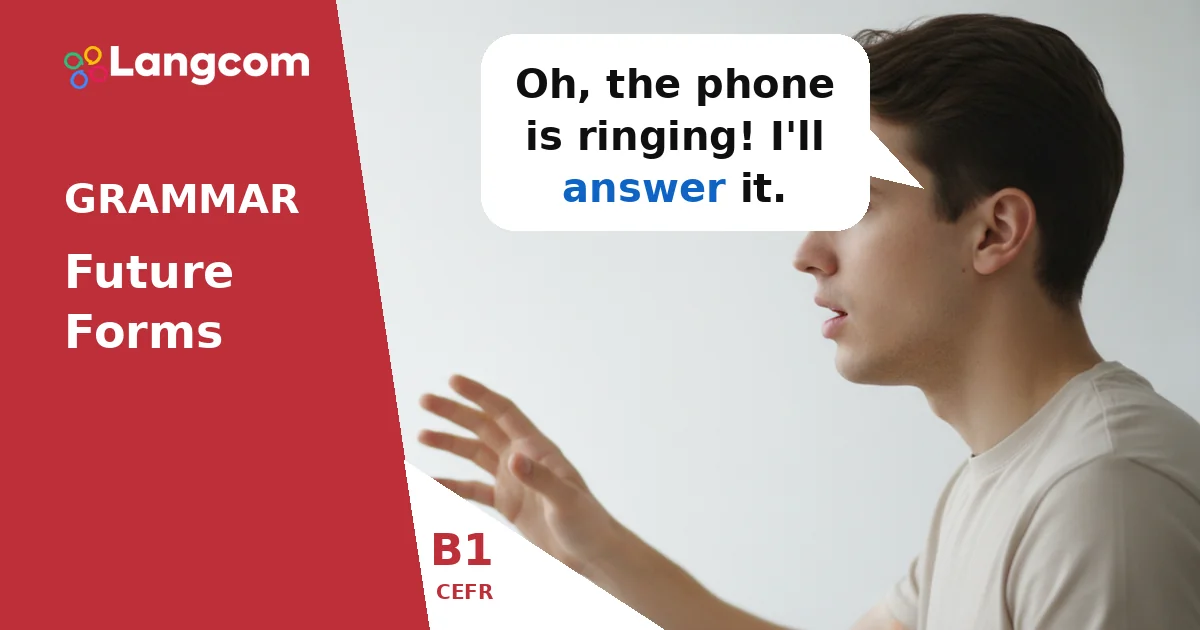

Will is used for spontaneous decisions, offers, promises, and requests about the future, while shall is primarily used in questions to make offers or suggestions, especially with I and we.
We often use will when we decide something at the moment of speaking. For example, if someone asks, “Would you like tea or coffee?” you might reply, “I’ll have tea, please.” This shows a decision made right now.
Will also helps us make offers, like “I’ll help you with your bags,” or promises, such as “I won’t tell anyone your secret.”
Shall is less common than will. It is typically used in questions to ask for advice or to propose an idea, like “Shall we go to the cinema?” or “What shall I wear?”
What is the Future with ‘Will’ and ‘Won’t’?
We use will to talk about the future in several situations. It’s a very flexible word.
-
Spontaneous Decisions: These are choices you make at the moment of speaking, not planned before.
-
Offers: When you volunteer to do something for someone.
-
Promises: When you guarantee to do or not do something.
-
Requests: When you ask someone to do something for you.
The negative form is will not, which we usually shorten to won’t.
🎓 Learn English with the Blended method
Small groups · 24/7 AI Tutor · Cambridge preparation
Plans from $39 $79 per month
When Do We Use 'Shall' for the Future?
Shall is also a modal verb for the future, but it has more specific uses. It is much less common than will, especially in American English.
-
Offers (with I and we in questions): When you offer to do something for someone.
-
Suggestions (with we in questions): When you propose an idea or activity.
-
Asking for Suggestions (with I and we): When you want advice or ideas from others.
Remember, shall is almost always used in questions for these purposes.
How Do 'Will' and 'Shall' Work in Sentences?
Both will and shall are modal auxiliary verbs. This means they follow a simple structure.
-
Positive Form: Subject + will / shall + base form of the verb.
-
Negative Form: Subject + will not (won't) / shall not (shan't) + base form of the verb.
-
Question Form: Will / Shall + subject + base form of the verb?
The short form for will is 'll (e.g., I'll, you'll). The short form for will not is won't. For shall not, the short form is shan't, but this is very formal and rarely used today.
'Will' vs. 'Shall': Key Differences for B1 Learners
At B1 level, understanding the main difference is important.
-
Will is for general future actions, predictions, and decisions made at the moment of speaking. It is very common.
-
Shall is mainly used in questions with I or we to make offers or suggestions. It is less common in everyday speech.
In most situations where you might think of using shall, using will or another future form like going to is also correct and often more natural.
| Positive | Negative | Question | |
|---|---|---|---|
| I / You / He / She / It / We / They | will go / I'll go | will not go / won't go | Will you go? |
| I / We (for offers/suggestions) | shall go | shall not go / shan't go (rare) | Shall I go? / Shall we go? |
Examples
- Oh, the phone is ringing! I'll answer it.
- Don't worry, I won't be late for the meeting tomorrow.
- Will you please close the window? It's cold.
- Shall I help you carry those heavy bags?
- It's a beautiful day. Shall we go for a walk in the park?
- What shall we do this evening? I have no ideas.
Practice
✍️ Not sure which level you are?
Take our free placement test and get personalized feedback from certified Cambridge examiners.
Take our FREE Placement TestCommon mistakes for Spanish speakers
Spanish speakers sometimes make specific mistakes with will and shall:
-
Overusing shall: In Spanish, the simple future tense is very common. Learners sometimes translate this directly with shall for all future actions, which is incorrect. Remember, shall is mostly for offers/suggestions with I/we in questions. For general future, use will or going to.
Incorrect: I shall go to the party tomorrow.
Correct: I will go to the party tomorrow. (or I'm going to go...) -
Confusing will with going to: While both talk about the future, will is for spontaneous decisions and predictions, and going to is for plans and intentions made before the moment of speaking. For example:
Spontaneous decision: I'm hungry. I'll make a sandwich.
Pre-planned intention: I'm going to visit my grandparents next weekend.
Frequently asked questions
Is 'shall' common in everyday English?
No, shall is not very common in everyday spoken English, especially in American English. You will hear will much more often. However, it is still used for offers and suggestions, particularly in British English.
Can I always use 'will' instead of 'shall'?
In most cases, yes, you can use will instead of shall, especially for general future statements. For offers and suggestions with I or we, using will is also acceptable, but shall adds a slightly more formal or polite tone.
What's the difference between 'I'll' and 'I will'?
I'll is the short, contracted form of I will. They mean the same thing. I'll is more common in spoken English and informal writing. I will is used for emphasis or in more formal contexts.
How is understanding 'will' and 'shall' useful for B1 exams?
At B1 level, you need to show you can use different future forms correctly. Knowing when to use will for spontaneous decisions, offers, and promises, and shall for specific offers/suggestions, helps you express yourself precisely. This is important for speaking and writing tasks, where clear communication about future events is often tested.




0 Comments